AWSSI – Accumulated Winter Season Severity Index October 17, 2020
Posted by dvgibson in Uncategorized.add a comment
I watched this awesome presentation this week describing the AWSSI (awe-see) method of categorizing winter weather and taking some of the subjective personal variables out of it. Both the host for CoCoRahs, Henry Regis I believe, and Barb Bousted did an excellent job.
She got her inspiration from a PHD project she did trying to determine if the Long Winter described in Laura Engels Wilder’s book of that name was really that serve. The winter she describes was the one of 1880-81 and began for them on October 15.
So began a project to measure and qualify winters by maximum and minimum temperatures, snowfall and depth. Of course there are other factors, such as wind, total precipitation of all kinds and cloudiness, but are not as widely collected as the parameters chosen are, historically. (I do wish we were doing a better job of that now. – dvg)
When does winter begin? It was decided that winter would begin on the first day that the high temperature was below 32 degrees F, or when there was more than 0.1″ of snow on the ground. Or December 1. It runs for the meteorological winter, December – February unless extended by either cold or additional snow, or snow on the ground. And it is an index that accumulates, so you can check to see how bad this winter has been so far.
Easiest to find the current data by searching on mrcc and awssi to find the page on the Midwestern Regional Climate Center website. There you can find maps for historical winters as well as how this current one is doing, and details on many sites where the data has been compiled.
https://mrcc.illinois.edu/research/awssi/indexAwssi.jsp#info
I liked Barb’s take on snowfall amounts. “It’s like sausage, you don’t want to know what goes in it, but you love the results.”
(Snowfall is tough, there are rules about how to collect it, but the real world never looks like that. And it takes humans to do it, no automated measurements. I do have an idea on how we might develop something but more on that another time.)
You can find this webinar on the CoCoRahs web site:
Description: Presenter: Barb BousteadNOAA/NWS’s Warning Decision Training Division, Norman, OKThis webinar will look at the Accumulated Winter Season Severity Index (AWSSI). AWSSI provides a scientific way to quantify the severity of a winter at any given location compared to its weather history. Using daily temperature, snowfall, and snow depth measurements, the AWSSI assigns a point total to each day of winter. Daily points add up through the winter season, giving a whole-season total at the end of winter. Besides the curiosity factor of having the numbers to support perceptions of whether a winter was severe or mild, AWSSI can be used to compare severity among sites or to compare the severity of one winter to others at a given site. The index can provide insight into wildlife and vegetation patterns, transportation and education impacts, and relationships between winter severity and other weather and climate patterns.
Garden is getting dry. April 21, 2016
Posted by dvgibson in Uncategorized.add a comment
This is turning out to be another spring like last year, very dry when we most expect lots of moisture. Makes me anxious to get back to my soil moisture measuring project.
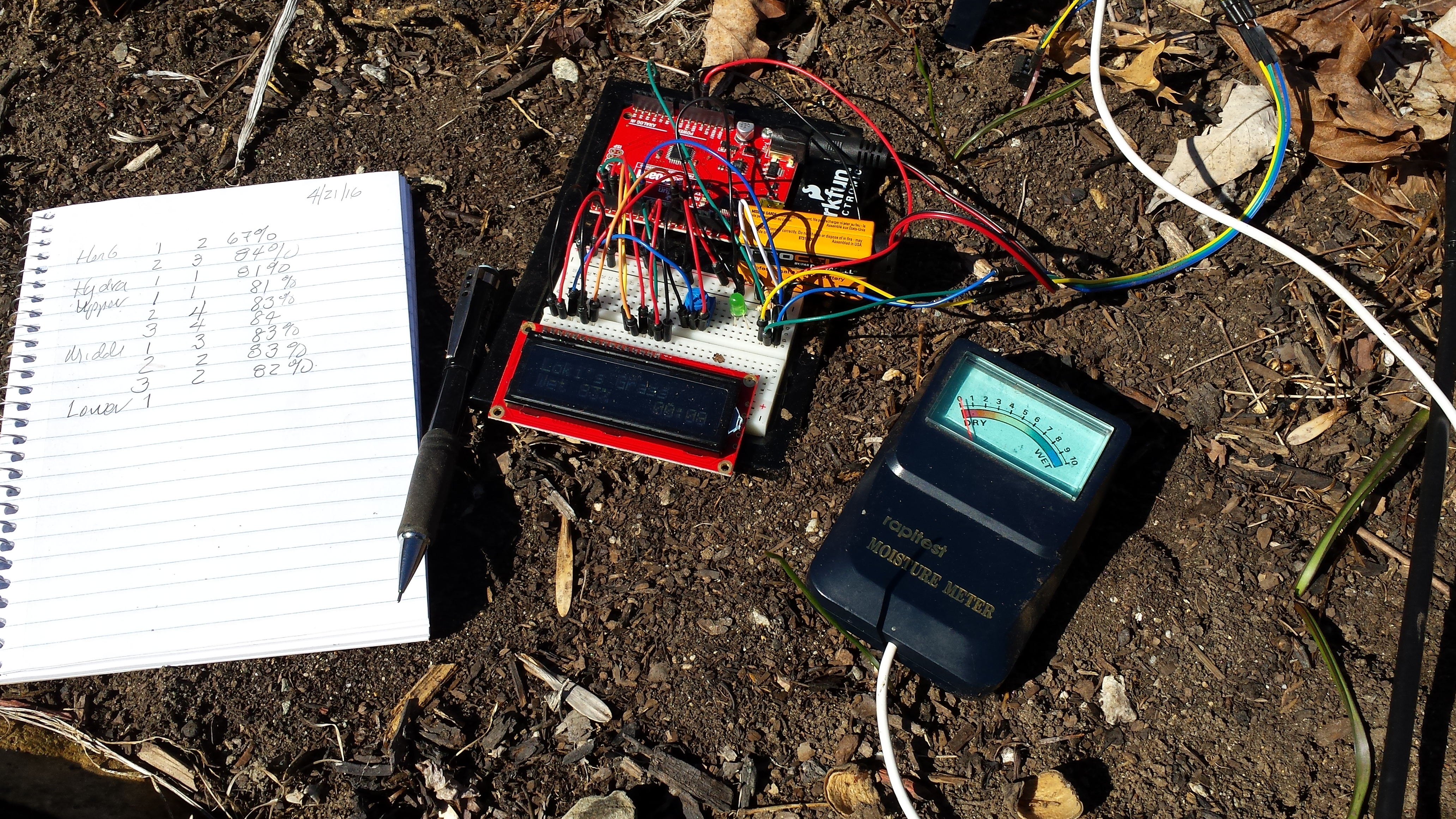
Today I took Loki’s Grass monitor out to the garden and made a number of measurements. I still need to adjust the range on it but have been very busy on The House at Kittery Point. I find the simple moisture meter from the garden store hard to trust. It depends on currents created by dissimilar metals on the probe and it hard to keep them in contact if the soil is at all loose. It goes from nothing, or negative to something depending on how you wiggle it. On the other hand the conductivity probe seems to be very consistent. I just need to find the range of conductivity that is interesting. Neither 0 or max is interesting. One is air, the other is soaking wet. And get going on an array of these that can be left permanently in place.
Right now I have it as a percentage range, 0 to 100%. The garden is averaging around 81%.
Risky Business November 23, 2015
Posted by dvgibson in Uncategorized.add a comment

There is an app for that, and if not, build it! October 29, 2015
Posted by dvgibson in Uncategorized.add a comment
Smart Thermostats and Smoke Detectors October 6, 2015
Posted by dvgibson in Uncategorized.add a comment
I have been using timer controlled thermostats since way back. Just no way I am going to remember to set it back when I go to bed or leave, every time, and then there is the nuisance of having to get up or come into a cold house and wait for the heat to come up. So a flexible timer has been important, with individual programs for workdays and weekends and ways to override for holidays. But still it’s not perfect.
When we moved into the house at Kittery Point the heating plant was aging and we replaced it with one using a rather sophisticated smart (for its day) controller that adjusts the heat provided to the radiators according to the outdoor temperature with an eye on the indoor temperature, just to see how it is doing. It has plenty of flexibility to program for workdays and weekdays and override for holidays. And since the radiators and piping installed ca 1870 is so massive it is slow to respond. Better to plan ahead and give it time to bring up the temperature. So I lost interest in programmable thermostats.
But if I were interested, the Nest thermostat would be the one I would look into. It both learns your pattern and is commandable from your smartphone. If it was not so expensive I would get one just to monitor the indoor temperature when I am away but I am not faulting the price. Its pretty sophisticated new technology so commands a good price. I do have a weather station that posts to the web many indoor parameters as well as outdoor so I am good for that right now.
At the E2Tech Expo I was at last week I heard about MyEnergy which is an effort to teach you about how much energy you can save by monitoring how much you use. They were acquired by Nest which seams logical. Some power companies are offering something like that, even CMP here does, but all that monitors is electrical use. Now that we have smart electric meters, and devices like the Nest thermostat could know how much time your heat is running you could get a better dash board on your personal energy use. Google had an effort like that one, Google PowerMeter, but that is gone. I do have a device from Current Cost that gave me my own smart power metering but they are gone now. And Google now owns Nest who own MyEnergy. I did find it at myenergy.com and signed up. It can read my electric use direct from CMP but so far I do not see a way to input my other energy hog, the oil burner. We use some gas for cooking but small and spread out over the year. Will have to report back on that.
However the Nest smoke detectors do have me excited. I have always believed in smoke detectors in the home. Having once been a volunteer fireman I have seen first hand how they can save lives and how not having is a really bad idea. When they first appeared on the scene they were really nifty pieces of technology. Now they are looking really outdated.
Nest smoke detectors have some nice features, they chat with you first if there might be a problem and let you respond instead of embarrassing you in front of your guests when you go high heat cooking on the stove like I do. And to deal with the low battery issue they can send you a message on your smartphone that the battery needs replacing.
Side Note: Wonder how they get the conventional smoke detectors to start their low battery warning at 3:00 AM? The devices only use a tiny bit of power, so the battery lasts a long time, and a battery’s performance varies by temperature so during the middle of they night, provided you are being good and have a night time set back thermostat, the room temperatures hits a low maybe around 3:00 AM and trips the low batter alert.
I also like the idea of being able to monitor the house from afar. Generally when we travel we have someone who checks on things several times a day but a lot can happen when no one is there and it would be comforting to know that all is well.
I have something like six or seven smoke detectors in our house and have been slowly replacing them as they age. None of them are good for more than 10 years, the detector slowly ages. And now they come with 10 year life time batteries, lifetime being the lifetime of the detector so you replace the whole thing at once. And older ones get dust in them and high humidity messes with them. The Nest detectors use six AA cells, more power than the 9 v batteries that older ones do but I expect that is to run the WiFi link. So I am thinking the next time I need to replace one I will get a Nest.
E2Tech Expo, Portland Maine, 2015 October 2, 2015
Posted by dvgibson in Uncategorized.add a comment
I spent the day at USM yesterday at the E2Tech Expo. It was a day cramb-packed with speakers and exhibits to see so I will just give my top takeaways here.
- Maine is not doing all that bad in the renewable energy sector given our remoteness from the rest of the country, the lack of broadband to much of the state and the current political climate. And we have a lot to offer, not the least of which is the talent we have in this state. Those things we are can fix and are working on.
- One of the biggest problems in renewable is lack of capital. Capital goes to proven technologies. There is capital available but lots more could be used.
- Storage is a big issue. Most renewables are intermittent, when the sun shines or the wind blows, so storage will be key. Progress is being made on that.
- Perhaps the biggest return on investment, and perhaps the easier and quicker to implement is efficiency. When resources are limited and harm to the environment is an issue, wasting less gives leveraged returns.
- Verification will be important and is intriguing to me, a guy who like to measure stuff. How do the investors, the regulators and consumers know that the technology being applied really does provide the benefit promised?
Shades of EAVE September 15, 2015
Posted by dvgibson in Uncategorized.2 comments


Still Diving August 27, 2015
Posted by dvgibson in Uncategorized.add a comment
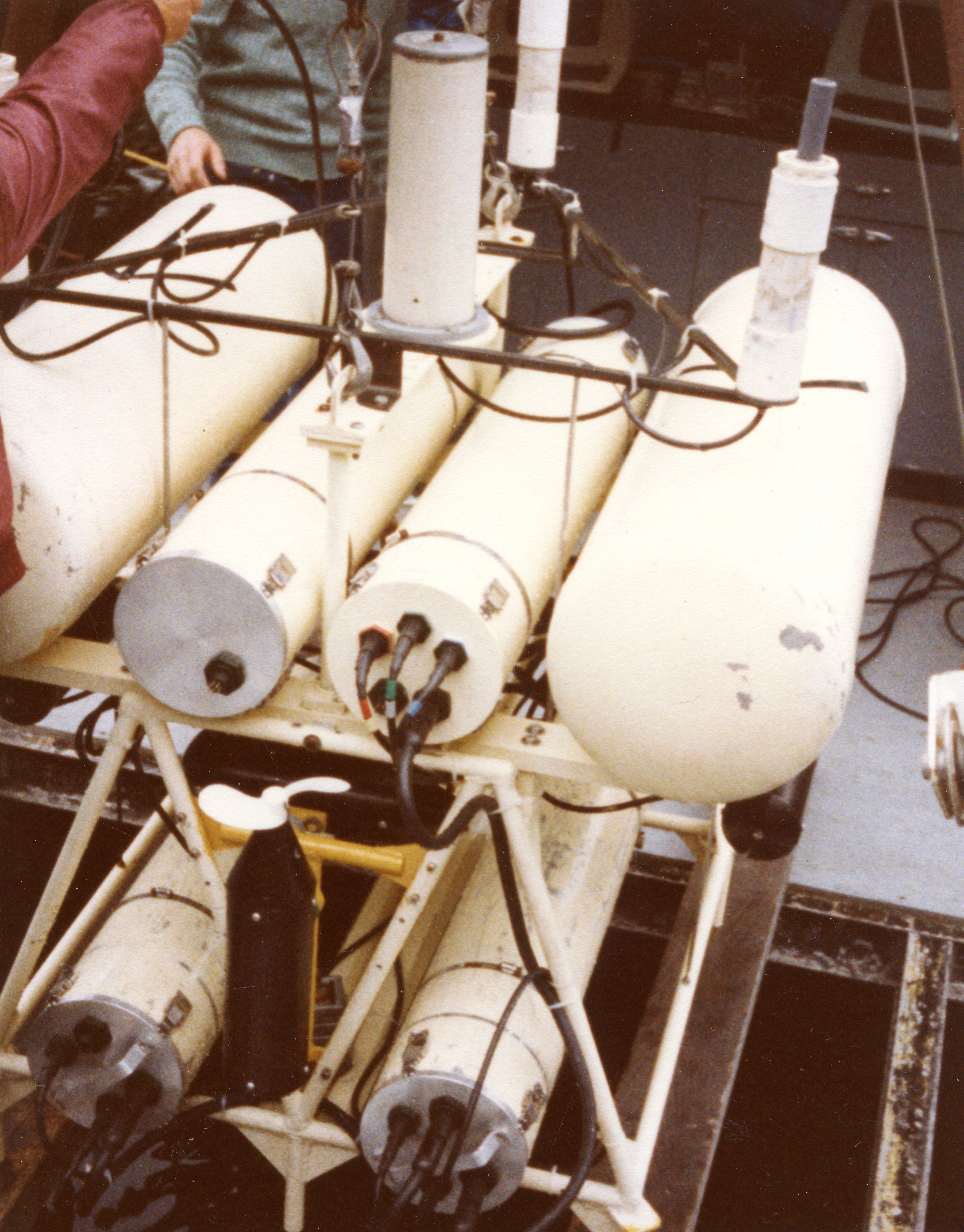
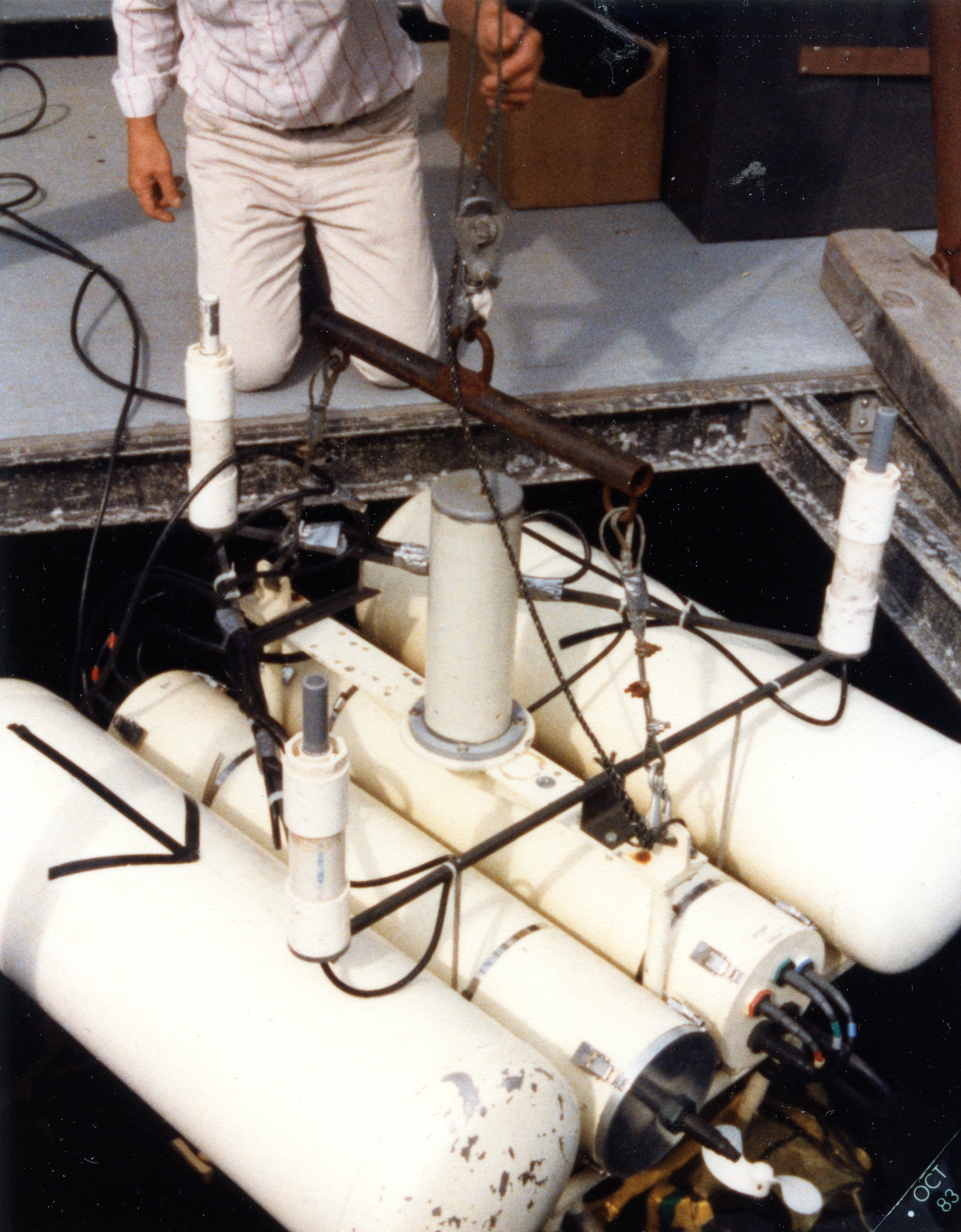
The current issue of Popular Mechanics, September 2015 has great tribute to Bob Ballard. He has been one of my heros from back in the days that I worked for the Marine Systems Engineering Laboratory at UNH. At the time I was working for Dick Blidberg and Jim Jalbert. They gave me a great opportunity to get into computer hardware and software after a few years away from the tech world which had changed by leaps and bounds. And I got to have fun in and around boats. They were working on autonomous underwater vehicles, ADOM and EAVE. Actually ADOM was under ice but that is just water in solid form. This was at about the time Ballard became famous for finding the Titanic and as I recall he had visited our lab prior to the discovery. We were hoping to interest him in an autonomous tender vehicle for his Argo vehicle.
Finding the Titanic was just one triumph of the many he has had and he shows no interesting is stopping now. I like that. His JASON project is an educational initiative that reaches out to school children to give them more opportunities to learn about the world around us and under us. I am wondering about his emphasis on the individual though, becoming stars. He has become a star but I gather from what I read he gives his team credit for making it possible. Will look for more to read on him.
I am also wondering what an “avalanche” looks like on the ocean floor. He talks with excitement in finding them. But to me they are a event. So did he see avalanches happening, and they continue to happen? Or the aftermath of avalanches? Again need to read up more on that.
http://www.popularmechanics.com/adventure/a16715/bob-ballard-oceanographer-titanic/
Maybe there is an answer to nuclear power. June 6, 2015
Posted by dvgibson in Uncategorized.add a comment
Re-reading an old Popular Science from July 2011 yesterday which focused was The Future of Energy. It covers all forms and there is a very reveling chart that shows all of our sources of energy, for the US, where it goes to, and how much is lost. More than half of what is produce is lost!
The article explains the various ways nuclear power is generated; light-water, molten salt, and fusion. The first is what we use world wide now, the second has been proven 50 years ago, but not done commercially, and the third is pie in the sky, but being developed.
The first is very dirty, and wasteful, only 4% of the fuel is used, leaving us with 96% around to store for ever, and is inherently dangerous. They have to have humans there to keep them from blowing up.
The second can work with lower grade fuel and uses up 95% it, leaving on faction of the waste that the first does. And it can use the “spent” fuel from the first. And it is inherently safe. Yes there is radioactive material but if the humans were to disappear on all power be lost, it will self-decommission into a pool of solidified salts.
Then I read a story in the current issue of Popular Science on two young scientist at MIT who are hard at work launching a company to create commercial versions of the second. There are challenges, but they are more of implementation, rather that how it works. They have two issues, lack of funding, the US is pouring money into very dirty oil and gas and has no interest in nuclear, and regulation, the NRC is just keeping the status quo. not interested, or funded to do anything new. But on the other hand, the Chinese are all over it. They are planning to build 70 new nuclear power plants. Now how has it come to the point that the US no longer even cares about being the leader in science or industry? Health and safety?
Nova – The Great Cathedral Mysteries, the Dome a Florence February 27, 2015
Posted by dvgibson in Uncategorized.add a comment
 Deep Ocean to Deep Space