IBM Partners with 28 Business Schools and Universities to Help Train Tomorrow’s Data Scientists – United States May 29, 2014
Posted by dvgibson in Uncategorized.add a comment
| So we are educating students to work with big data. I get that, the technical challenges are significant. But what about education of the ones who will know how to apply the results? I want to learn more about.that. |
New programs provide big data and analytics degree seekers with skills that merge business and IT for successful data science careers
ARMONK, N.Y. – 28 May 2014: IBM (NYSE: IBM[1]) today announced it is partnering with 28 new business schools and universities to help prepare students for the 4.4 million jobs[2] that will be created worldwide to support big data[3] by 2015.
Working hand in hand with universities and business schools gearing up for the upcoming Fall 2014 semester, IBM is helping expand and launch new curricula providing students with business knowledge and IT skills for data intensive careers. For example,Case Western Reserve University[4] is offering a new undergraduate program in data science and analytics that will provide a broad range of students with industry-specific skills to capitalize on big data for competitive advantage.
The explosion of big data has rapidly created a global and industry-wide opportunity for job candidates who can uncover insights from data to solve problems and act on findings quickly. Between now and 2022, the U.S. Bureau of Labor Statistics projects a faster-than-average increase[5] in employment opportunities for computer and information research scientists. Yet, a recent IBM CFO study noted that even though 82 percent of those surveyed see the value of integrating enterprise-wide data, only 24 percent think their team is up to the task. Educators and employers must work together to narrow this skills gap.
IBM is helping to ensure the explosive demand for data scientists is met by partnering with the following universities to offer Big Data and Analytics curricula: Arizona State University, Babson College, Boston University, Case Western Reserve University, Dakota State University, Illinois Institute of Technology, Illinois State University, Indiana University, Iowa State University, Johns Hopkins University, Northwestern University,Rensselaer Polytechnic Institute, San Jose State University, Southern Methodist University, University of Arkansas at Little Rock, University of Arkansas Fayetteville, University of Denver, University of Colorado Boulder, University of Maryland – College Park, University of Massachusetts Boston, University of Missouri, University of North Carolina at Charlotte, University of Southern California, University of Texas at Austin, University of Tennessee – Chattanooga, University of Tennessee – Knoxville, University of Virginia and Worcester Polytechnic Institute.
“Taking advantage of the transformational opportunity presented by Big Data and Analytics has become a key priority for organizations around the globe,” said Bob Picciano, Senior Vice President, Information and Analytics Group, IBM. “To embrace this growing opportunity, companies today must hire a workforce with a broad range of Big Data and Analytics expertise. IBM is dedicated to partnering with academic institutions and providing students with the skills needed to make an impact.”
Unlocking data to make better business decisions has become a crucial part of success across a variety of professions. In fact, 83 percent of business leaders[6] cite big data and analytics an important part of their plan to enhance competitiveness. By partnering with both universities and business schools, IBM is helping develop curricula that mix both business and IT skills. For instance, students can build depth and breadth across multiple disciplines and become more marketable to future employers by applying a minor in Analytics to a major in Business, Marketing or Mathematics.
“Working with IBM, our goal is to design programs that will provide students with big data and analytics domain expertise,” said Case Western Reserve University Vice Provost for Undergraduate Education Don Feke, who is leading development of the new programs with faculty from across our campus. “In addition, by offering both a major and a minor in data science, we can essentially ‘data enable’ a wide range of students including those studying computer science, mathematics, communications and marketing. The opportunity is far reaching.”
Working with IBM, these 28 business schools and universities will join the more than 1,000 institutions that already have access to the latest Big Data and Analytics-focused technology innovations, hardware, curricula material, project-focused case studies, guest lecturers, and faculty awards to help accelerate curricula development. For example:
- Boston University’s Metropolitan College[7] is offering a Master of Science degree in Computer Information Systems with a concentration in Database Management & Business Intelligence to help equip students with the latest skills needed to manage the explosion of data in today’s modern enterprise.
- Case Western Reserve University[8] is launching a new undergraduate program in data science and analytics in the Fall 2014 semester. This effort includes a major and a minor in applied data science, and eventually a post-baccalaureate certificate program.
- Johns Hopkins University’s DC-based Center for Advanced Governmental Studies[9] is offering a Master of Science in Government Analytics and a Certificate in Government Analytics to provide students with the needed skills to address contemporary political, policy and governance challenges.
- University of Missouri[10] is developing an interdisciplinary Master of Science in Data Science and Analytics degree, providing students with access to IBM’s Open Cloud Architecture to have a comprehensive skill set in building, deploying, and managing cloud resources to analyze big data in journalism, engineering, informatics, and learning analytics.
These new university partnerships support IBM’s Academic Initiative[11], which includes a larger network of more than 30,000 unique partnerships between IBM and higher education professionals to help advance curriculum in areas including Big Data and Analytics, Cloud Computing, Security and Social Business. IBM also recruits from universities and business schools throughout the U.S. via career fairs and info sessions, leading classroom discussions and participating in student organization events.
IBM has established the world’s deepest portfolio of Big Data and Analytics technology that spans research and development, solutions and software. IBM has invested $24 billion to build its capabilities in Big Data and Analytics through R&D and more than 30 acquisitions. Today, more than 15,000 analytics consultants, 6,000 industry solution business partners, and 400 IBM mathematician are helping clients use big data to transform their organizations.
For more information about the IBM Academic Initiative, please visit: http://www-304.ibm.com/ibm/university/academic/pub/page/academic_initiative[12]
For more information about IBM Big Data and Analytics, please visit http://www.ibm.com/big-data/us/en/big-data-and-analytics/[13]
| Evernote helps you remember everything and get organized effortlessly. Download Evernote. |
The Slingshot that could kill the water shortage giant May 28, 2014
Posted by dvgibson in Uncategorized.add a comment
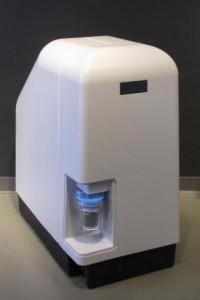
I read a great article in the current (June 2014) issue of Popular Science on Dean Kamen of DEKA R&D in Manchester, New Hampshire. The list of inventions he and his company have developed is very impressive, but I was even more impressed with they focus on making the world a better place. The Slingshot, which sprung from another project to create a better dialysis machine, one that could sit on a patient’s bed side table and work while they slept. But then he realized there was opportunity to use the water purifier which he created to make the dialysis machine practical to provide clean drinking water in developing countries, especially where disasters exacerbate the problem. And partnering with Coca-Cola to distribute it was genius.
Take a look at the Coca-Cola Ecocenter here:
http://www.coca-colacompany.com/stories/slingshot-how-it-works
And read more about Kamen at:
Zingerman’s 12 Natural Laws of Business May 26, 2014
Posted by dvgibson in Uncategorized.add a comment
At Newark Airport, the Lights Are On, and They’re Watching You – NYTimes.com May 9, 2014
Posted by dvgibson in Interesting.add a comment
On a flight back from Atlanta I read an article on Sensity Systems that makes smart LED lighting. Not only do they provide light, they monitor just about everything around them. Newark Airport now has them.
At Newark Airport, the Lights Are On, and They’re Watching You
By DIANE CARDWELL[1]FEB. 17, 2014
Photo 
This LED-based light fixture can gather and transmit data for automated analysis. Credit Peter DaSilva for The New York Times
Visitors to Terminal B at Newark Liberty International Airport[2] may notice the bright, clean lighting that now blankets the cavernous interior, courtesy of 171 recently installed LED fixtures. But they probably will not realize that the light fixtures are the backbone of a system that is watching them.
Using an array of sensors and eight video cameras around the terminal, the light fixtures are part of a new wireless network that collects and feeds data into software that can spot long lines, recognize license plates and even identify suspicious activity, sending alerts to the appropriate staff.
The project is still in its early stages, but executives with the Port Authority of New York and New Jersey[3], which operates the airport, are already talking about expanding it to other terminals and buildings.
To customers like the Port Authority, the systems hold the promise of better management of security as well as energy, traffic and people. But they also raise the specter of technology racing ahead of the ability to harness it, running risks of invading privacy and mismanaging information, privacy advocates say.
Photo 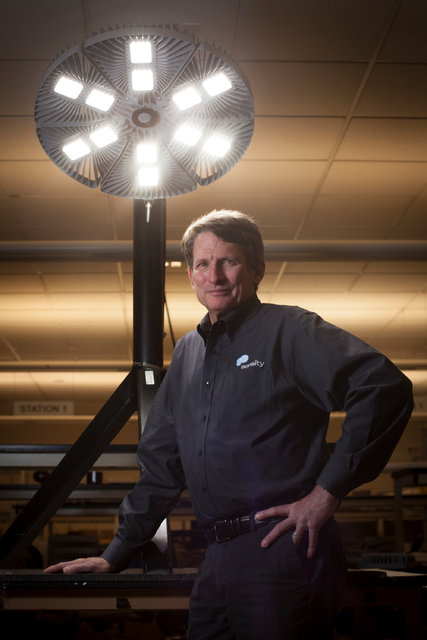
Hugh Martin, chief executive of Sensity Systems, says “there is a lot of value, I think, if we do it right, to this information.” Credit Peter DaSilva for The New York Times
Fred H. Cate, director of the Center for Applied Cybersecurity Research at Indiana University, described the potential for misuse as “terrifying.”
His concern derived not from the technology itself but from the process of adopting it, driven by, he said, “that combination of a gee-whiz technology and an event or an opportunity that makes it affordable.” As a result, he said, there was often not enough thought given to what data would actually be useful and how to properly manage it.
At Newark Airport, the Port Authority will own and maintain the data it collects. For now, it says, no other agencies have access to it, and a law enforcement agency can obtain it only through a subpoena or written request.
What began as a way to help governments and businesses save energy by automatically turning lights on and off has become an expanding market for lights, sensors and software capable of capturing and analyzing vast amounts of data about the habits of ordinary citizens.
The light fixtures are outfitted with special chips and connect to sensors, cameras and one another over a wireless network. Data that is collected — say, a particular car pulling up to the terminal — can then be mined and analyzed for a broad range of applications. Systems like the Port Authority’s, developed by a company called Sensity Systems[4], could soon be more widely available. Under a recent agreement, Amerlux[5], a leading lighting manufacturer, will start using the technology in its LED fixtures.
“We are opening up an entirely new area in lighting applications and services,” said Chuck Campagna, Amerlux’s chief executive, “including video-based security and public safety, parking management, predictive maintenance and more.”
Other companies, including giants like Cisco Systems and Philips, are racing to grab a share of that market.
Las Vegas is testing a street lighting system that can broadcast sound, and plans to use it mainly to control lighting and play music or to issue security alerts at a pedestrian mall.
Copenhagen is installing 20,000 streetlamps as part of a system that could eventually control traffic, monitor carbon dioxide levels and detect when garbage cans are full. Other government agencies and businesses have begun replacing thousands of lighting fixtures with LEDs, mainly to cut costs.
The trend is expected to accelerate as the fixtures become cheaper and more sophisticated. Navigant Consulting, a firm based in Chicago, has estimated that cities’ interest will prompt more than $100 billion in spending on the technology over the next 10 years.
“More and more what we’re seeing is decision-makers choosing networked lighting controls not just for the energy benefits but for a whole host of nonenergy benefits,” said Jesse Foote, a lighting industry analyst at Navigant.
Sensity’s technology, for example, would allow light fixtures and sensors to pinpoint a gunshot, sense an earthquake or dangerous gas, or spot a person stopping at various cars in a parking lot.
Photo 
An assembler at Sensity Systems works on one of the company’s sensor-equipped, wirelessly networked lighting fixtures. Credit Peter DaSilva for The New York Times
Some cities already have more targeted sensors, like the ShotSpotter gunshot location system in use by more than 70 American cities, including Boston, Milwaukee and San Francisco. But the Sensity network can bring them together through existing light fixtures.
The system could, once software is developed, also make shopping more convenient — a potential boon for malls losing business to the Internet. Sensing a shopper pulling into a parking lot, the system could send an alert to a smartphone, showing empty spaces, or a coupon.
“We see outdoor lighting as the perfect infrastructure to build a brand new network,” said Hugh Martin, Sensity’s chief executive. “We felt what you’d want to use this network for is to gather information about people and the planet.”
Continue reading the main story
Recent Comments
19 February 2014
Our country is coming more and more to resemble some lesser beast; a chimera of sorts – part UK, with their invasive and heavy-handed use of…
Chicago Guy
18 February 2014
As another commentator stated a few months ago, "If you not smuggling heroin, you shouldn’t mind the cavity search…"Orwellian logic at…
Sancho
18 February 2014
One more sign that we’re becoming a surveillance state, bit by bit, a grotesque situation to which habit will accustom us, just as it…
- See All Comments
But that is precisely what worries privacy advocates.
“There are some people in the commercial space who say, ‘Oh, big data — well, let’s collect everything, keep it around forever, we’ll pay for somebody to think about security later,’ ” said Justin Brookman, who studies consumer privacy at the Center for Democracy and Technology. “The question is whether we want to have some sort of policy framework in place to limit that.”
Even those developing the technology acknowledge the concerns.
“I’m not saying that I know the exact balance point, but there is a lot of value, I think, if we do it right, to this information,” Mr. Martin said, whether that value is heightening security or helping stores compete with Amazon.
His company has a board that includes Heather Zichal, President Obama’s former energy and climate change adviser, and former Representative Richard A. Gephardt to help figure out the implications of the technology.
“I just think we need to be very thoughtful about the positives and the negatives,” Mr. Martin said. He added that the Sensity network is encrypted and “supersecure.”
In Las Vegas, officials say they are not interested in using the video and audio surveillance capabilities of the system they are testing, called Intellistreets, and are instead looking at the use of audio broadcasting to enhance ambience and safety in public areas.
In Copenhagen, the emphasis is on efficiency, said Eric Dresselhuys, an executive vice president of Silver Spring Networks, which designed the network to connect that system.
Executives say the potential for the advanced lighting is nearly boundless.
“No one really wanted the smartphone 20 years ago because they didn’t know they could have it,” said Fred Maxik, founder and chief technology officer of Lighting Science Group, which manufactures LEDs. “And I think the same is true of lighting today: No one knows what lighting is going to be capable of.”
A version of this article appears in print on February 18, 2014, on page A1 of the New York edition with the headline: At Newark Airport, the Lights Are On, and They’re Watching You.
 Deep Ocean to Deep Space